
School playground markings: games, zones and safety areas
A school yard is a blank canvas that can do far more than hold a break. The right playground markings turn a plain tarmac surface into a space that gets children active, structures play, supports the curriculum and keeps the yard safer, all without adding a single piece of equipment. From hopscotch and number grids to activity zones and clear safety areas, markings are one of the most cost-effective ways to transform how a school yard is used, every day, for years.
This guide explains the three things good playground markings deliver, games, zones and safety areas, and what makes them work and last. It is about designing a yard that adds play value and safety, not just decorating the tarmac.
Games, zones and safety areas: the three roles of playground markings
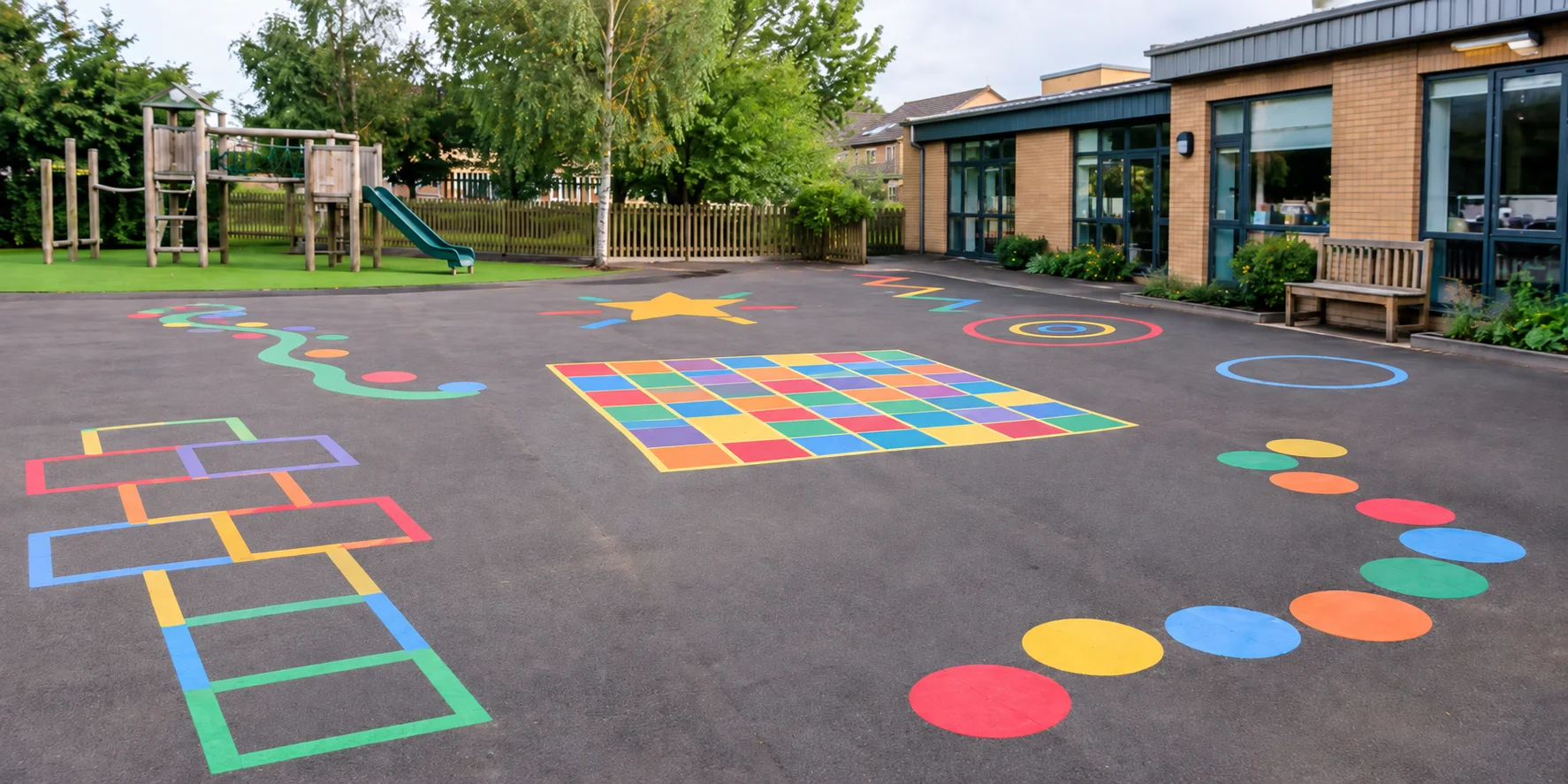
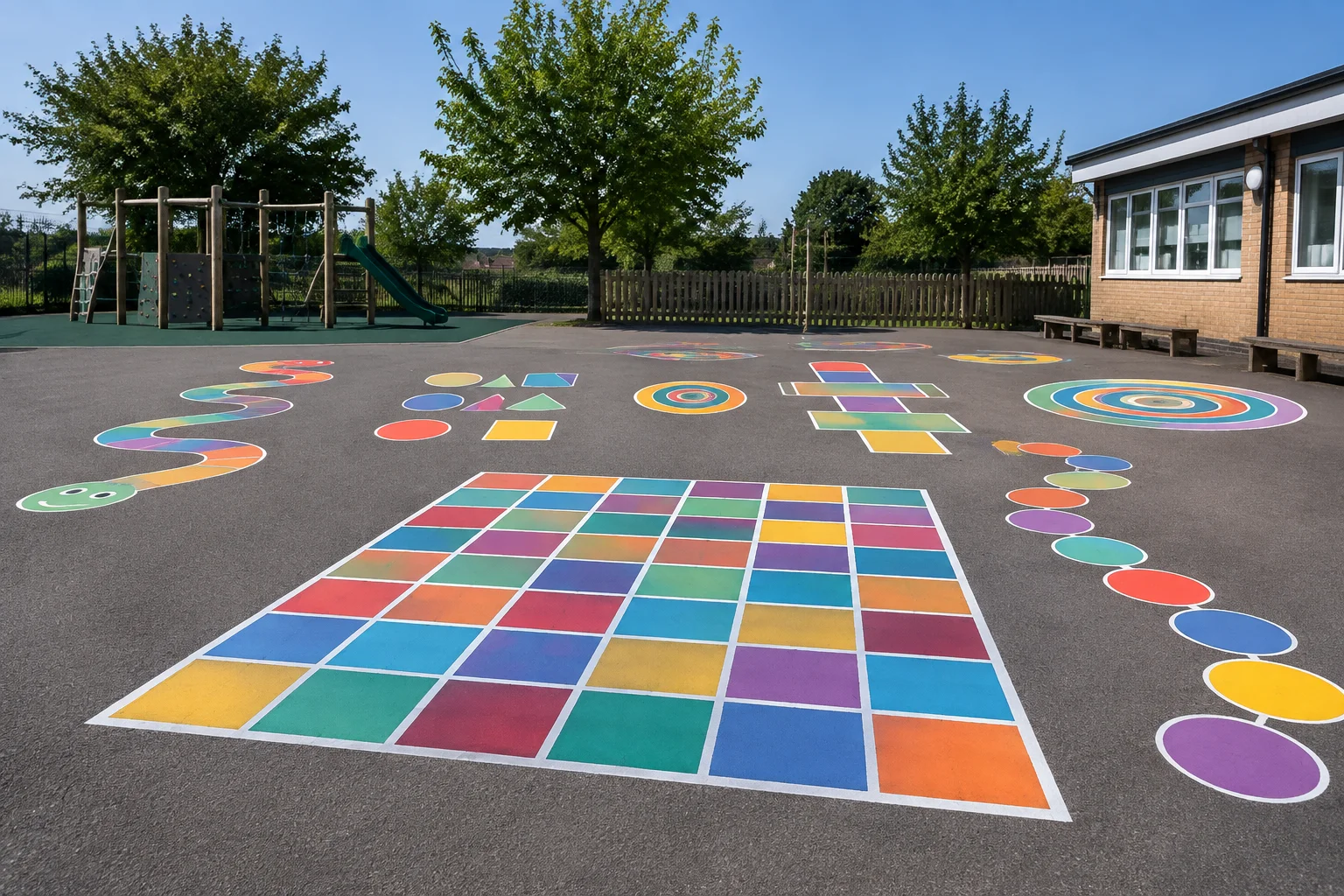
Good school playground markings do three jobs. Games markings such as hopscotch, snakes and ladders, number and letter grids, target games and maps give children ready-made activities and can support learning. Zone markings divide the yard into areas for different kinds of play, active games in one place, quiet or social areas in another, so busy and calm activities do not clash. Safety markings define boundaries, keep-out areas, lining-up spots and any traffic or cycle routes, making the yard easier to supervise and safer to use. Together they raise activity levels, structure the space and improve safety, and durable marking keeps them working through constant use.
Games markings: activity and learning
The most visible playground markings are the games, and they earn their place by getting children moving and giving them something to do. Classic markings include hopscotch, snakes and ladders, target and throwing games, running tracks and trails, and grids and shapes for group games. Many double as learning tools: number grids, letter and alphabet markings, clock faces, compass points and maps bring the curriculum outdoors and support active learning. Because the games are always there, they prompt spontaneous activity every break without a teacher having to organise it, which is exactly what raises daily activity levels across a school.
Zone markings: structuring the space
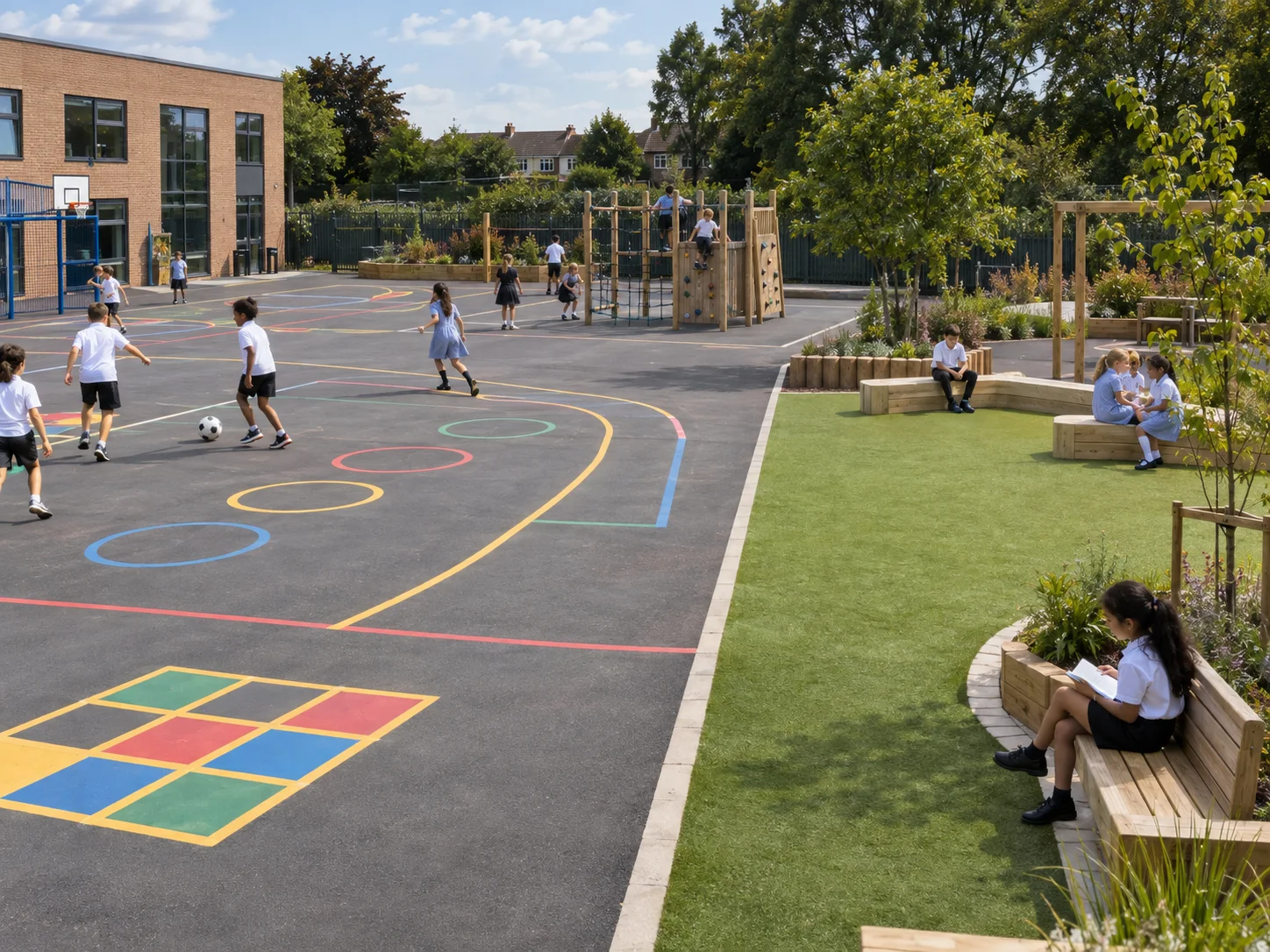
A single open yard often means fast, active games colliding with children who want to sit and talk, which causes both conflict and minor injuries. Zoning solves this by using markings to divide the space into areas for different kinds of play:
- Active zones for running games, ball games and chasing.
- Quiet or social zones for sitting, talking and calmer play.
- Specific activity areas, such as a marked court or a trail.
- Clear boundaries between zones so children and supervisors know where each activity belongs.
Zoning makes a yard calmer and easier to supervise, because activities that do not mix well are physically separated, and everyone can see where each type of play is meant to happen.
Safety markings: a safer, clearer yard
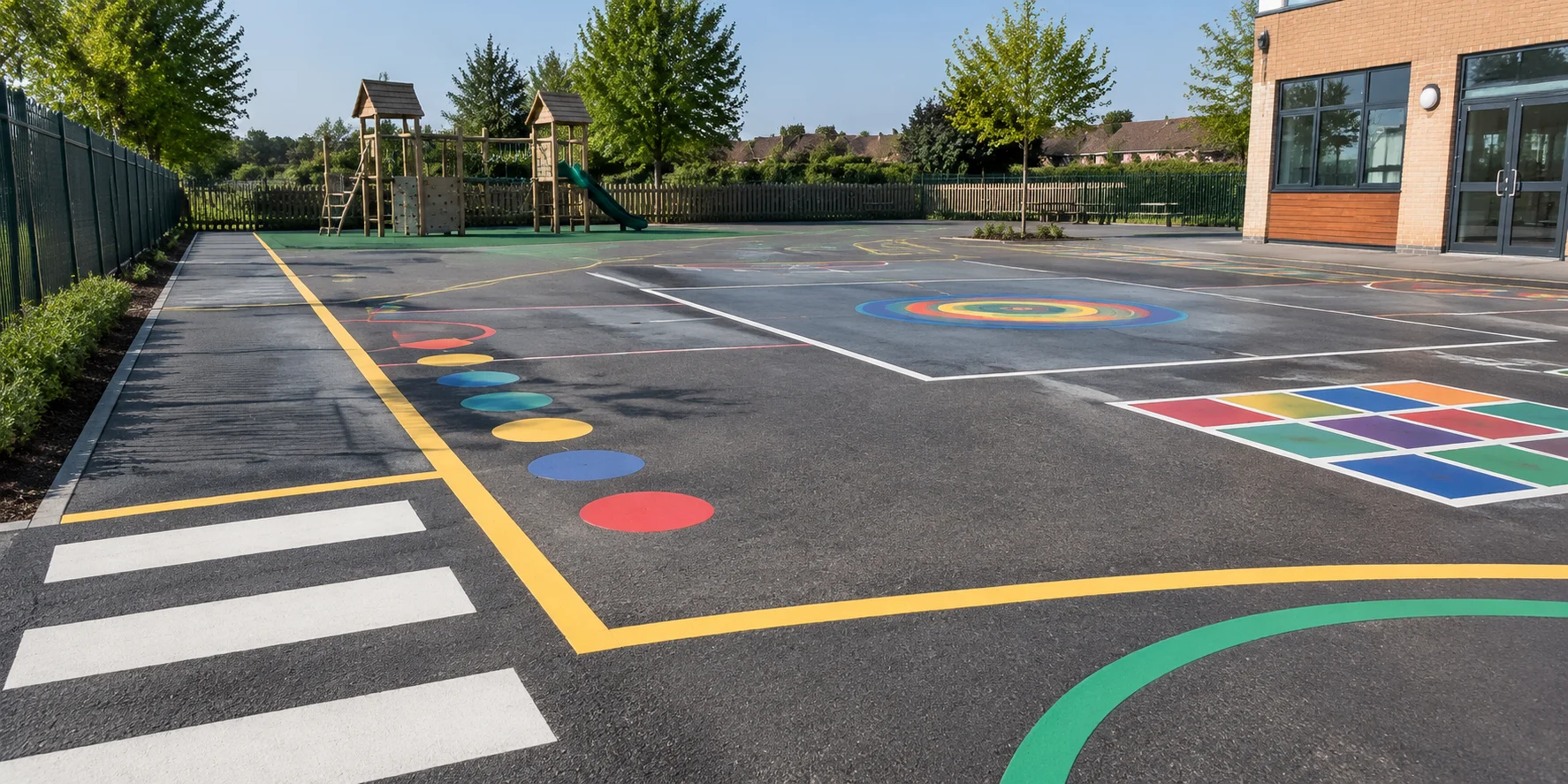
The third job of playground markings is safety and order. Well-placed markings define the edges of play areas and any keep-out zones, provide lining-up spots and assembly points that make transitions orderly, and mark any traffic, drop-off or cycle routes that cross or border the yard so pedestrian and vehicle areas are kept apart. Clear safety markings make a yard easier to supervise and reduce the everyday friction and hazards of a busy school break. Where the yard adjoins any vehicle movement, clear demarcation between where children play and where vehicles go is particularly important.
Design the yard as a whole
The best playground schemes are planned as a single layout, games, zones and safety together, rather than adding markings piecemeal over the years. A whole-yard design makes sure the active and quiet areas are sensibly placed, the games fit the space, and the safety markings tie it together, so the yard works as one considered environment.
Markings that survive a school yard
A school yard is one of the most demanding surfaces there is: hundreds of feet on it every day, all weather, and regular cleaning. Markings that fade, flake or wear off within a year are a poor investment, so durability and clear, bright colour that lasts are essential. RapidShield, our UV-cured line marking, cures in around 30 seconds under UV light so a court or hall can be back in use almost immediately, is available in any colour, is free of the strong solvent smells and VOCs of some traditional paints, and is built to last, so lines stay crisp under heavy footfall. Fast curing is especially useful in a school, because a yard can be marked quickly, often within tight windows around the school day or during holidays, and be ready for use with minimal disruption.
UV Line Marking creates durable, colourful playground markings as Ireland’s dedicated UV line-marking specialist. See our line marking services, and get in touch to discuss transforming your school yard with games, zones and safety markings designed as one.
For guidance relevant to school facilities, see gov.ie on schools and education.
Frequently asked questions
What do school playground markings do?
They do three things: games markings such as hopscotch, grids and trails give children ready-made activities and can support learning; zone markings divide the yard into areas for active and quiet play so they do not clash; and safety markings define boundaries, lining-up spots and any traffic routes. Together they raise activity, structure the space and improve safety.Can playground markings support learning?
Yes. Many markings double as learning tools, number and letter grids, clock faces, compass points, maps and shapes bring the curriculum outdoors and support active learning. Because they are always there, they prompt both play and learning spontaneously without a teacher having to set them up each time.How do markings make a school yard safer?
By defining the edges of play areas and any keep-out zones, providing orderly lining-up and assembly spots, and clearly marking any traffic, drop-off or cycle routes so pedestrian and vehicle areas are separated. Zoning also separates fast active games from quieter areas, which reduces collisions and makes the yard easier to supervise.How long do playground markings last?
It depends on the system used, as a school yard is very demanding with heavy daily use, all weather and regular cleaning. Durable, fast-curing UV line marking is designed to keep its colour and stay crisp under that kind of use, so the markings remain clear and effective for years rather than fading or flaking within a season.