
Basketball and netball court dimensions and layouts
A sports court is only as good as its markings, and with basketball and netball the lines are not decoration, they define the game. Get the dimensions or the layout wrong and the court does not play correctly, cannot be used for competitive matches, and may have to be redone. Whether you are marking a new court, refreshing an old one, or fitting both sports onto one surface, it pays to know the standard dimensions and how the two games lay out differently before a single line goes down.
This guide sets out the standard court dimensions and layouts for basketball and netball, explains how they differ, and covers the practical points that make the difference between a court that plays correctly and one that does not. For exact competition dimensions, always confirm them against the current rules of the relevant governing body.
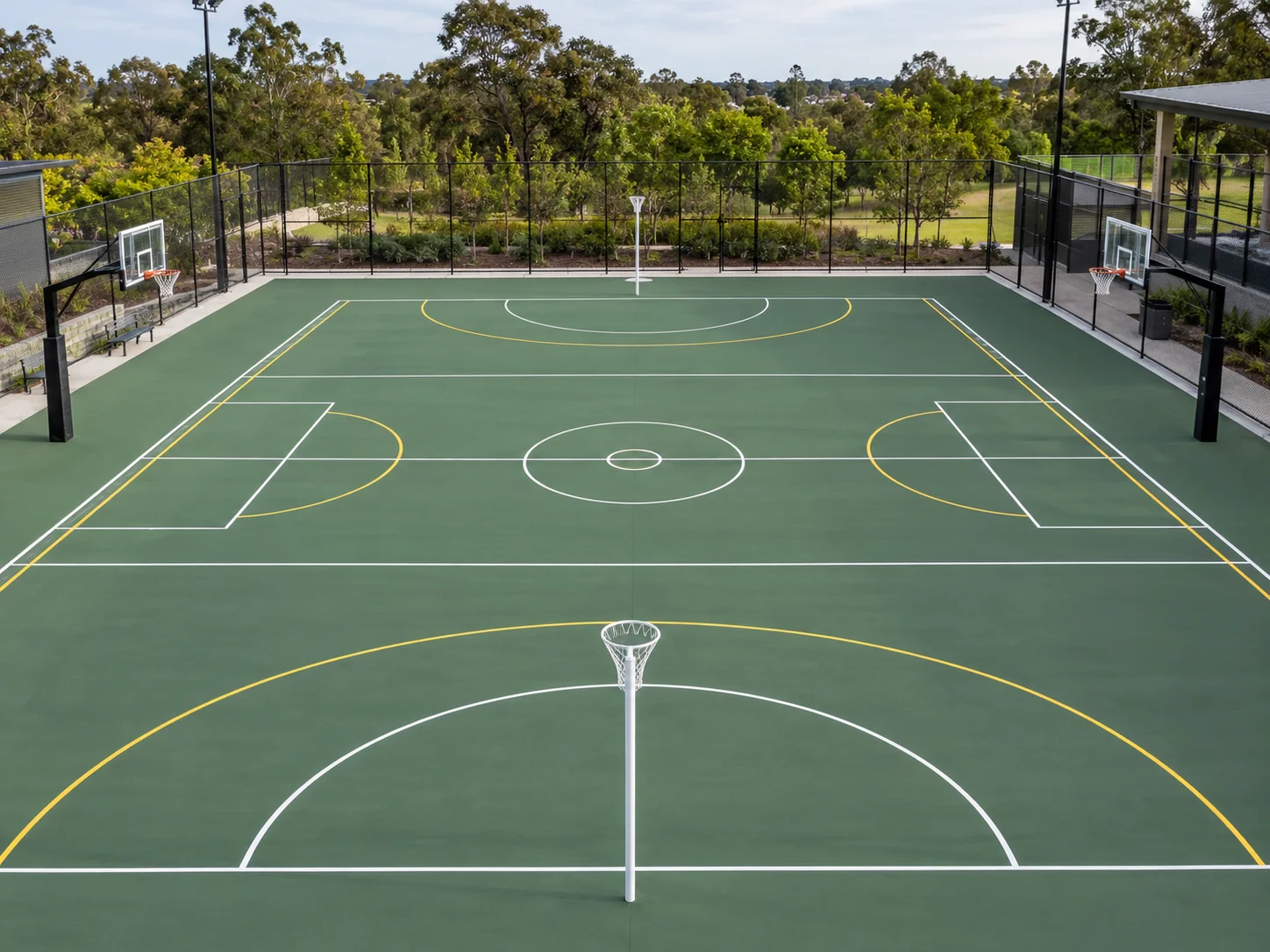
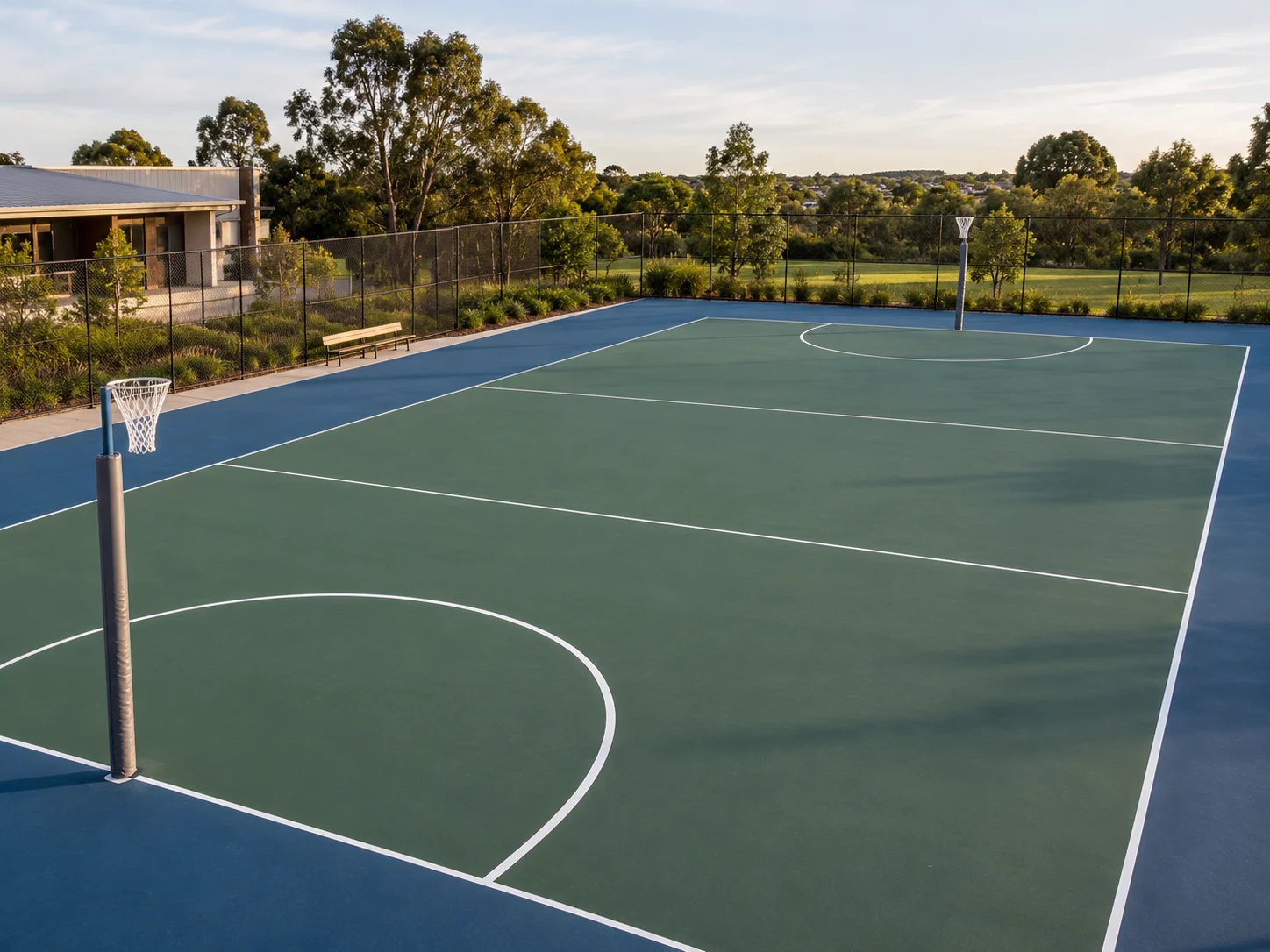
Basketball court dimensions and layout
Basketball is played on a rectangular court, and under the international rules set by FIBA, which Basketball Ireland follows, a full-size court measures 28 metres long by 15 metres wide. Within that boundary are the recognisable features: the centre line and centre circle, the two three-point arcs, the free-throw lanes (the key), free-throw circles at each end, and the restricted areas under each basket. Each feature has its own defined position and size, meaning the court is a set of connected measurements rather than just an outer rectangle. Smaller courts are used for junior and recreational play, but the layout follows the same pattern scaled to the available space. The key practical point is that every element is positioned in relation to the others and the baskets, so accuracy across the entire court matters, not just the outer dimensions.
Netball court dimensions and layout
A netball court is both larger and laid out according to a completely different principle. A full court measures 30.5 metres by 15.25 metres and, rather than having a single playing area, it is divided along its length into three equal thirds by two transverse lines, which determine where players in each position can move. At the centre is a small centre circle, and at each end is a semi-circular shooting circle from which goals are scored. There are no three-point arcs or free-throw lanes; the defining features are the thirds and shooting circles. This third-based structure is unique to netball and is essential to how the game is played and officiated.
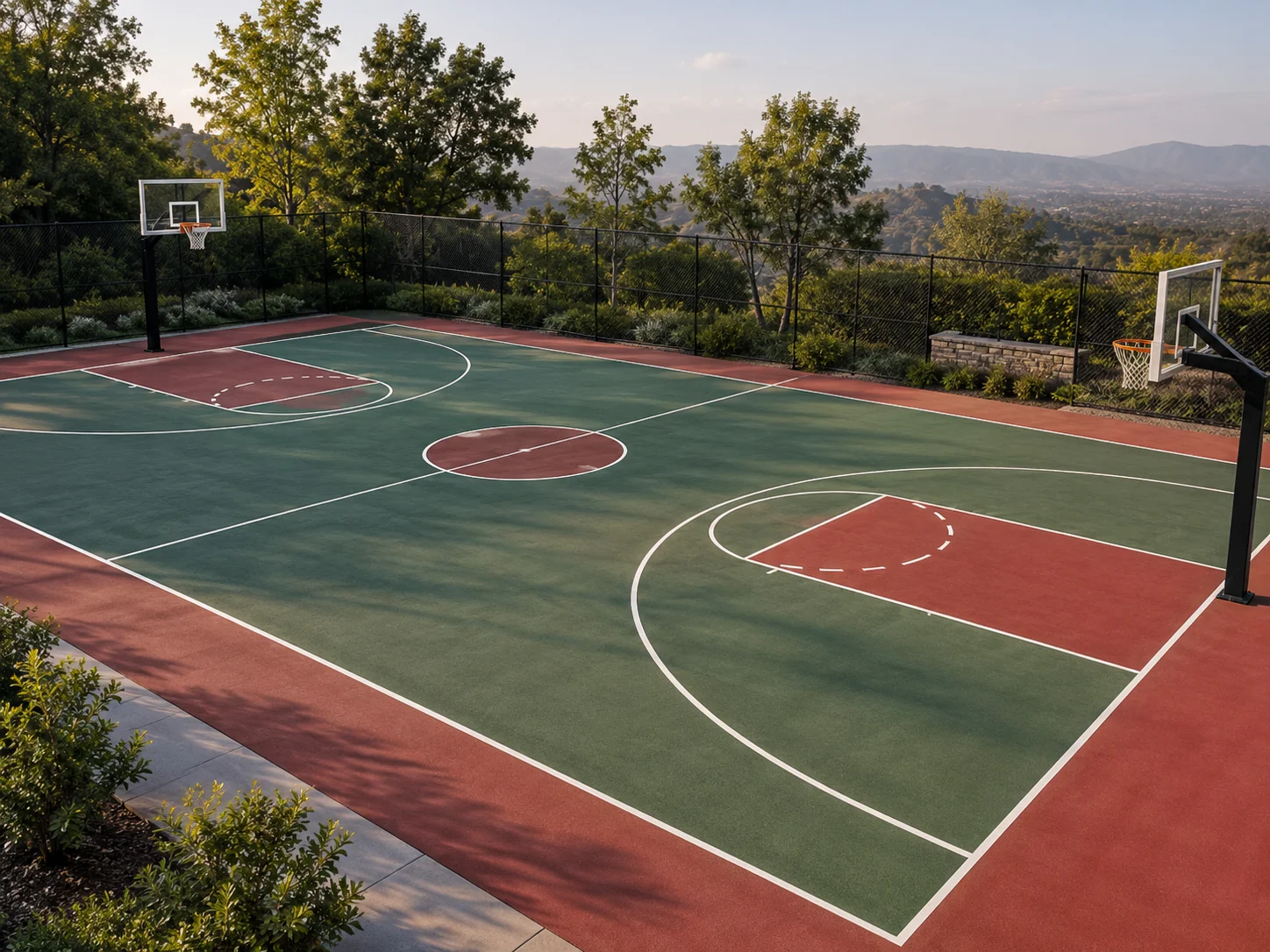
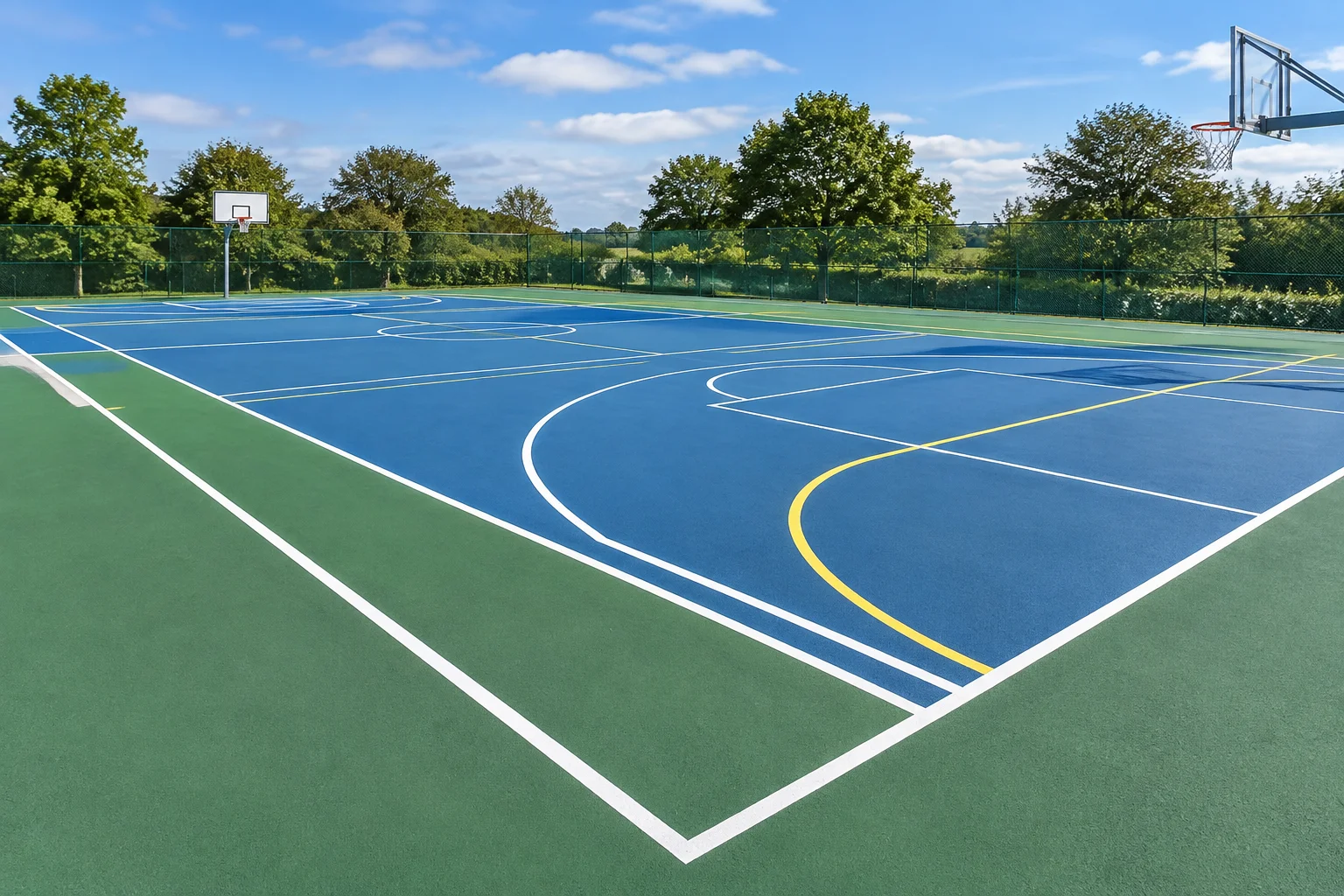
How the two courts differ
- Netball courts are larger than basketball courts.
- Basketball uses arcs, lanes and scoring areas around baskets.
- Netball uses thirds and shooting circles to control player movement.
- Both require accurate dimensions and clear markings.
These differences matter most when both sports must share one surface, because the two sets of lines overlap and must be distinguishable, which we cover in our guide to MUGA courts and overlay colours.
Getting a court marked correctly
Marking a court accurately requires careful setting-out, correct dimensions according to the governing body’s rules, and durable, clearly visible lines. Court lines experience heavy wear from footwork and cleaning, so the marking system needs to remain crisp without fading or lifting. RapidShield, our UV-cured line marking system, cures in around 30 seconds under UV light, allowing a court or hall to return to use almost immediately. It is available in any colour, avoids the strong solvent smells and VOCs associated with some traditional paints, and is built to last, keeping lines crisp under heavy footfall. Because it cures so quickly, a court can be marked and back in play with minimal downtime, which is important for busy schools, clubs and leisure centres.
UV Line Marking is Ireland’s dedicated UV line-marking specialist. See our line marking services and our external line marking for outdoor courts, and get in touch to discuss marking a basketball or netball court. Always confirm exact competition dimensions against the current rules of Basketball Ireland or the relevant netball governing body before marking for competitive play.
Frequently asked questions
What are the dimensions of a basketball court?
Under the international FIBA rules followed by Basketball Ireland, a full-size basketball court measures 28 metres by 15 metres, with a centre circle, two three-point arcs, free-throw lanes and boundary lines positioned in relation to the baskets. Smaller courts are used for junior and recreational play, following the same layout scaled to the available space. Always confirm exact figures with the relevant governing body.What size is a netball court?
A full netball court measures 30.5 metres by 15.25 metres and is divided along its length into three equal thirds, with a centre circle and a semi-circular shooting circle at each end. It is larger than a basketball court and follows a completely different layout, based around the thirds and shooting circles rather than arcs and lanes.Can basketball and netball share the same court?
Yes, they are often marked on the same surface as a multi-use area, but because the two sports have different dimensions and overlapping line patterns, both layouts must be accurate and the lines must be clearly distinguishable, usually through the use of different colours. Planning which sport takes visual priority is an important part of designing a shared court.Why does accurate court marking matter?
The lines define the game, so incorrect dimensions or layouts mean the court will not play correctly and may not be suitable for competitive matches, often requiring it to be remarked. Every element is positioned in relation to the others, so accuracy across the entire court is essential, and the lines need to remain durable and clearly visible under heavy use.
Useful resource
For national guidance on sports facilities, see Sport Ireland on multi-use facilities.
Marking a basketball or netball court?
UV Line Marking provides fast-curing, long-lasting court markings designed for sports surfaces.